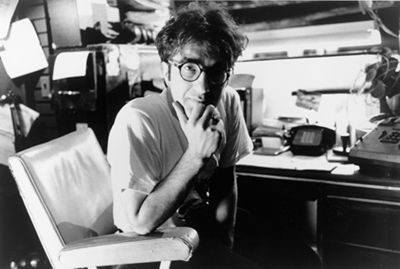

Have you ever started a film and wondered, ten minutes in, whether something has gone wrong? Too many threads. Too many silences. People behaving oddly without explanation. If that is your reaction, let me ask you a better question. What if nothing is wrong at all?
That is exactly how an Atom Egoyan film wants to meet you.
Who is Atom Egoyan and why bother?
Atom Egoyan was born in Egypt to Armenian parents and raised in Canada. Already an unusual beginning. Displacement, memory, inherited identity, private rituals. These are not themes he later discovered. They are baked into his life and, inevitably, into his cinema.
Egoyan does not make films about heroes. He makes films about people who cope badly, quietly, obsessively. People who build systems to survive grief, guilt, desire, or shame. This is not comfortable material. It is also not decorative. It is deeply human.
And here is the uncomfortable truth that needs saying plainly.
If you are planning to watch a new Egoyan film, meaning anything made after Felicia’s Journey, you should seriously reconsider. Not because Egoyan lost intelligence or ambition, but because the conditions that allowed his best work to exist are gone.
Understand Why His Great Films Needed Time and Trust
Egoyan’s early films were shaped by an extraordinary level of freedom, much of it thanks to producer Robert Lantos. Lantos allowed him to take risks that would be almost unthinkable today. Slow beginnings. Unclear motivations. Long stretches where nothing is explained.
There is another factor people underestimate. This was before streaming.
Audiences went into cinemas and usually stayed. Leaving halfway through was rare. Egoyan could afford to open a film with thirty minutes of apparent disorder because he knew the audience would not instantly flee. He could demand patience.

This is why films like Family Viewing (brilliant title!) can dwell on disturbing domestic rituals without rushing to justify them, or why The Adjuster (what an unpredictable film!) can calmly follow strange professional and sexual obsessions without apology. The space mattered.
Accept the Chaos, It Is the Point
If you want to watch Egoyan properly, you must accept that the beginning will feel wrong. Threads appear without context. Characters act in ways that feel unsettling. In Exotica (mesmerizing movie!), you are dropped into a world of private dances, ritualized grief, and voyeurism long before you understand why these people keep returning to the same places.

This is deliberate.
Egoyan builds meaning slowly. He allows obsession to reveal character. He lets repetition replace exposition. And he trusts that if you stay with him, the emotional logic will emerge.
It always does.
By the end, the chaos tightens into something devastatingly clear. In Exotica, fractured individuals come together not through redemption, but through recognition of shared loss. The catharsis is quiet, earned, and unforgettable.
Watch for the Final Scene, It Underscores the Key
This is where Atom Egoyan quietly proves what kind of filmmaker he is.
Egoyan is not building a puzzle in the way a Poirot or Sherlock story does. He is not waiting for the final scene to reveal the solution, expose the culprit, or reward you for being clever. If you approach his films like that, you will miss the point entirely.
Instead, the final scene underscores what was already there.
Egoyan often saves a last, restrained moment that does not change the story, but sharpens it. It clarifies the emotional truth rather than the plot mechanics. In Calendar (a film that changed history!), the closing moments do not explain the film. They quietly realign it. Suddenly, what felt distant becomes intimate. What seemed repetitive reveals longing. You are not given new information. You are given a new way of feeling what you already saw.
This is why his endings linger. They do not shout. They insist.
Egoyan trusts you to connect the dots without forcing you to play detective. He is not asking you to solve the film. He is asking you to sit with its meaning, fully aware that it may only settle hours or days later.
Talk About the Film, Then Rethink It
An Atom Egoyan film is not finished when the credits roll.
Talk about it with someone who watched it with you. Disagree. Compare emotional reactions. If you are alone, read a few thoughtful essays. Not because the film is opaque or pretentious. Egoyan is not interested in that. But because reflection adds layers.
Then do something even more important. Rewatch the film in your mind.

Take The Sweet Hereafter (Canadian filmmaking at its peak!). Reconsider the Pied Piper of Hamelin. Is Nicole the child left behind? Is the lawyer the piper, leading a grieving town with promises that feel helpful but hollow? These ideas are not puzzles to solve. They are lenses that change how you feel about what already happened.
Commit Fully or Do Not Bother
So how should you watch an Atom Egoyan movie?
Without distraction. Without impatience. Without demanding instant clarity.
Bring people who can tolerate discomfort. People who are not frightened by strange obsessions or moral ambiguity. Choose curiosity over certainty. Trust that the film knows where it is going.
Because Egoyan is not asking you to decode a mystery. He is asking you to look at human behavior from an angle you would normally avoid.
If you allow that, his best films will stay with you for years.
And if you do not, that is fine too. But then you were never really watching in the first place.